my focus
Translational Medical Humanities
With Julia Kristeva and colleagues, I have developed translational medical humanities as an approach that understands language and narrative as the medium through which illness becomes intelligible. A symptom must be recognised, named, reported and believed before it can be treated. Bringing medical knowledge translation into dialogue with humanistic translation studies, we examine the texts, practices and institutions through which medical knowledge is produced and translated, asking what counts as evidence, whose suffering is recognised and how care becomes possible.

Evidence, empathy and compassion
I conceptualize empathetic and compassionate care as translational practices in which biomedical evidence and guidelines are interpreted and negotiated through the stories people live by. This includes examining how people’s experiences, values and circumstances inform the interpretation of evidence and the adaptation of interventions, particularly in contexts of controversy or crisis.

Institutions and compassionate care
I study what makes compassionate care possible and how services, routines and professional categories shape whose needs are recognised and how they are addressed. This includes research with migrant communities on bringing hospital care into the home.

Technology, voice and care
I explore how artificial intelligence and digital health tools represent patients’ experiences, mediate relationships and influence care—and how they can be designed and evaluated with attention to voice, context and uncertainty.

Sustainability and the conditions of health
How can care respond to suffering across social, geographical and generational distances? I examine how understandings of sustainability shape health policy and practice, and how responsibility for the conditions that sustain health is recognised and shared. This includes studies of how sustainability is taught and interpreted in health professions education.
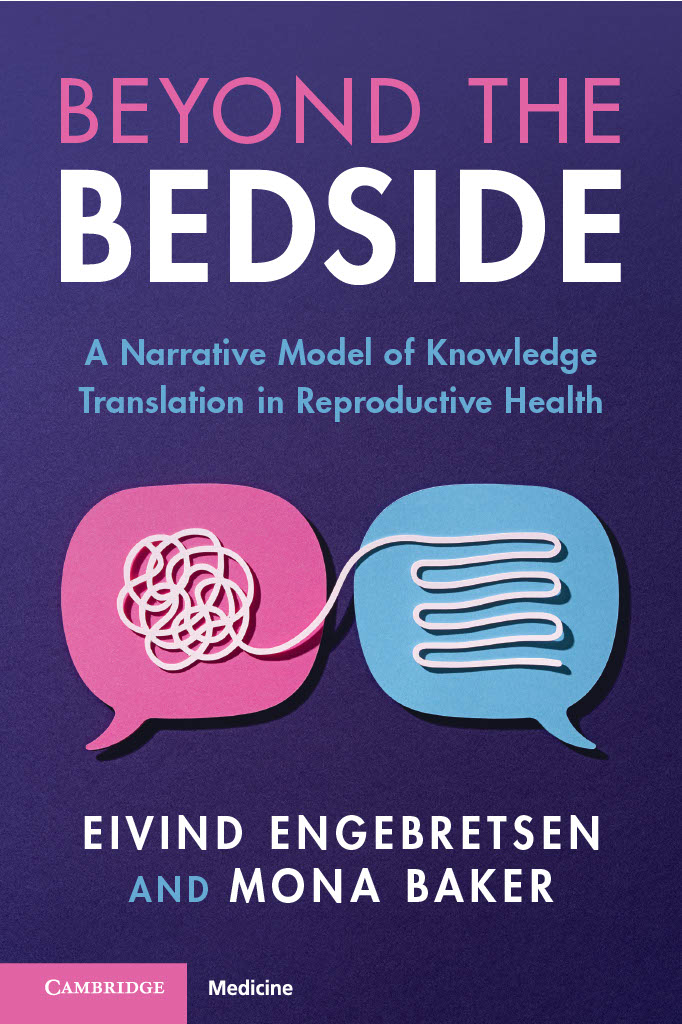
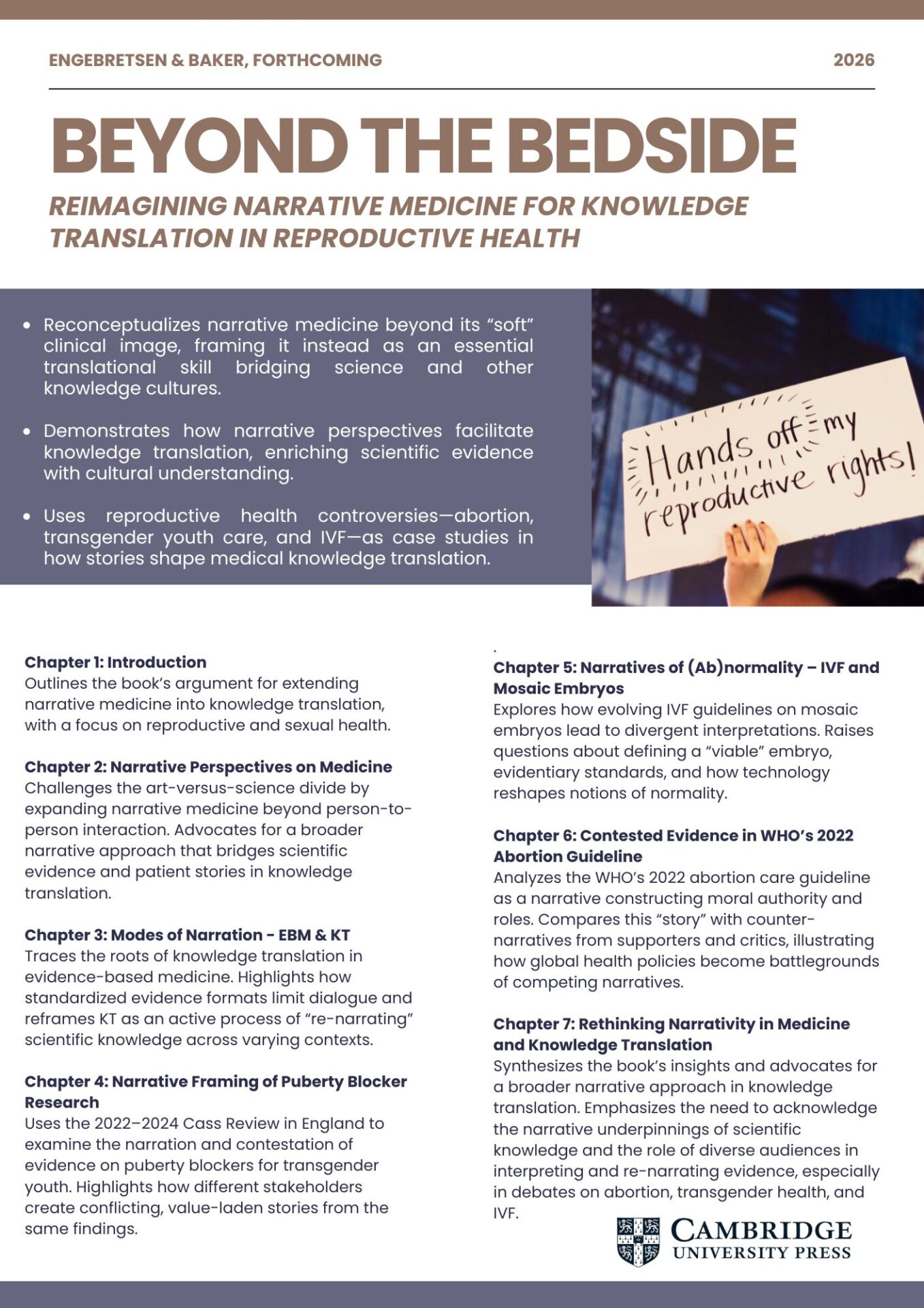
Beyond the Bedside
Cambridge University Press, forthcoming
Storytelling helps shape medical knowledge: how problems are defined, evidence is interpreted and action becomes possible. Through debates about embryo selection in IVF, puberty blockers and abortion care, we trace how evidence is transformed as it moves through research, guidelines, policy, law and public debate. The book develops a narrative approach to understanding and improving these translations.
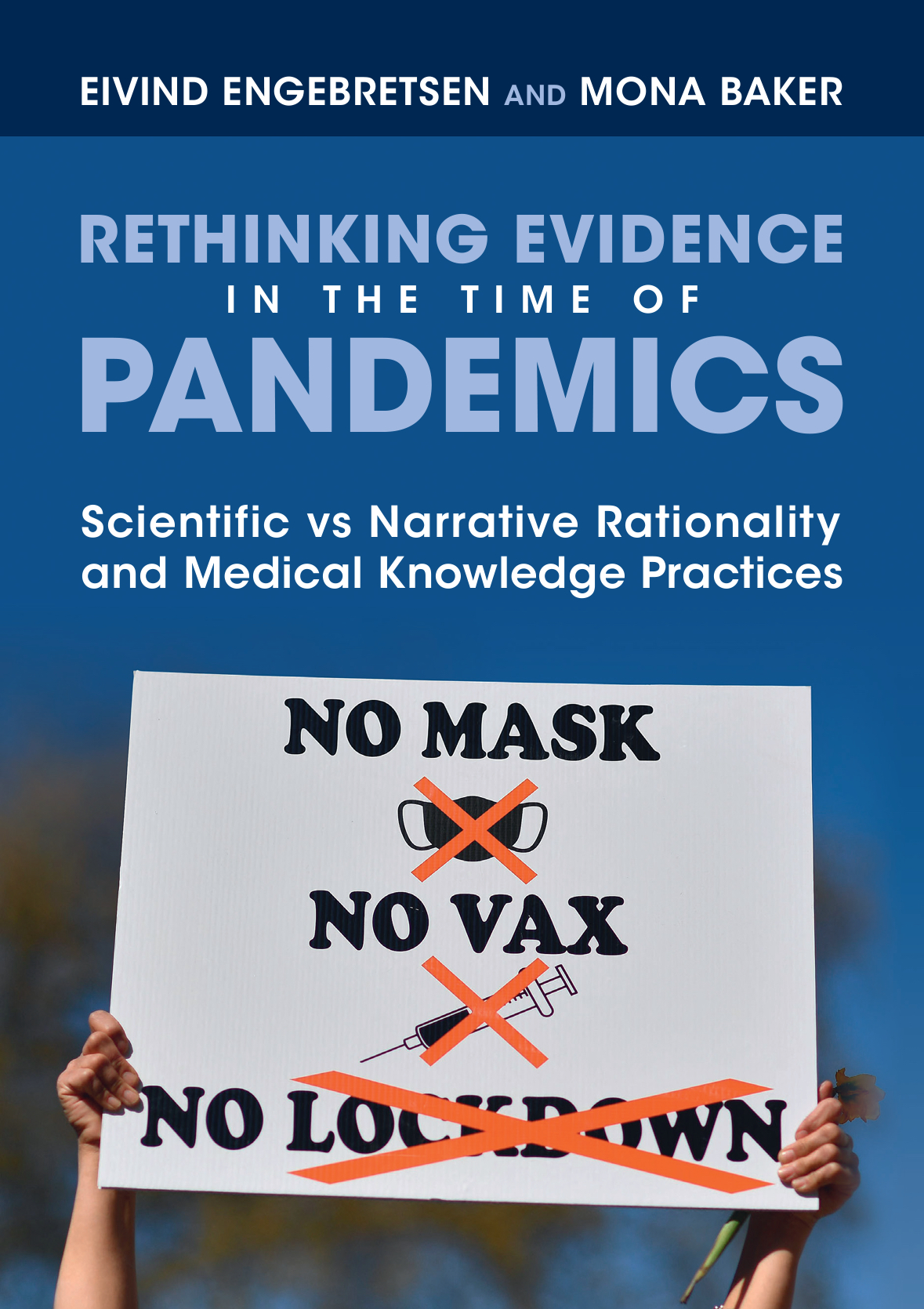
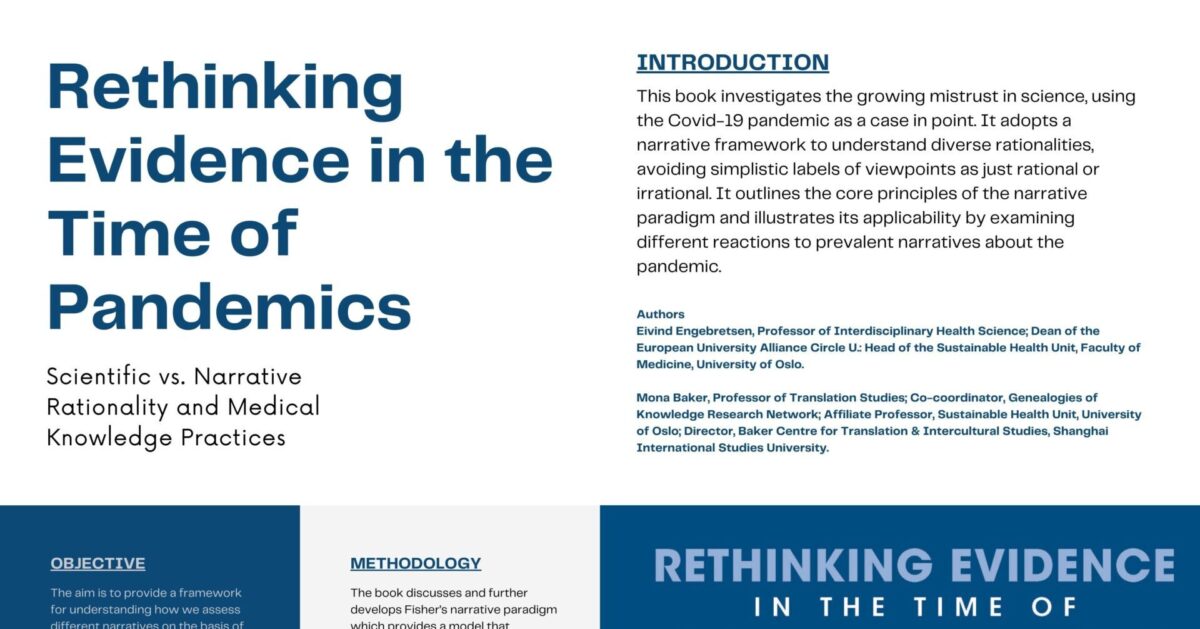
Rethinking Evidence in the Time of Pandemics
Cambridge University Press, 2022
Why can the same evidence lead people to different conclusions? Through debates about masks, lockdowns and vaccines, we examine how evidence acquires meaning within narratives shaped by experience and values. The book offers a framework for understanding disagreement and engaging more thoughtfully with the reasons people give for belief and action.
Blog

courses & lectures
Teaching and Learning
Online Lecture Series
Bridging Humanities and Medicine for Sustainable Impact – An Introduction to Translational Medical Humanities
How can the humanities and medicine work together to understand and improve health? This interdisciplinary course explores how language, culture, narrative and values shape medical knowledge and practice. Students consider how these perspectives can inform responses to challenges in healthcare and sustainable development.
Circle U. Open Campus
As Dean of the Open Campus, I work with colleagues across nine European universities to develop shared educational opportunities. The Open Campus brings students and disciplines together through courses, lectures, summer schools and collaborative projects addressing common societal challenges.